
Human DCAF1 is a multidomain protein that plays a critical role in protein homeostasis. Its WDR domain functions as a substrate recruitment module for RING-type CRL4 and HECT family EDVP E3 ubiquitin ligases, enabling the ubiquitination and proteasomal degradation of specific substrates. DCAF1’s activity has been implicated in cell proliferation and is documented to promote tumorigenesis. Additionally, the DCAF1 WDR domain is hijacked by lentiviral accessory proteins to induce the degradation of host antiviral factors, such as SAMHD1 and UNG2. These diverse roles make DCAF1 an attractive target for therapeutic development in oncology and antiviral applications, as well as a promising candidate for targeted protein degradation strategies. Using two AI-driven technologies, we identified two distinct classes of DCAF1-binding ligands for this previously undruggable protein. Structure-guided optimization of these ligands led to the development of DCAF1-based proteolysis-targeting chimeras (PROTACs) that potently induce degradation of WDR5 and other cellular proteins, as well as a highly selective, cell-active chemical probe that effectively displaces the lentiviral Vpr protein from DCAF1 in both biochemical and cellular assays – highlighting its potential for HIV therapeutic development.
From novel DCAF1 ligands to PROTACs and chemical probes: Harnessing AI-driven technologies to target undruggable proteins
Abstract
Speaker
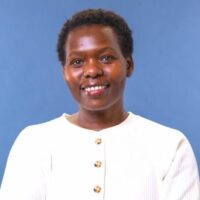
Dr Serah Kimani
Structural Genomics Consortium, University of Toronto, Canada
About (click to open/close)
Dr Serah Kimani completed an MSC in Structural Biology and a PhD in Molecular and Cell Biology at the University of Cape Town (UCT) under supervision of Prof Trevor Sewell, conducting research on the catalytic mechanism of amidase enzymes. After her PhD, Serah undertook a postdoctoral fellowship in Medical Cell Biology under the guidance of Professor Sharon Prince at UCT, focusing her research on the discovery of anti-cancer compounds. Dr Kimani then moved to Toronto (Canada), and has spent the last 5 years at the Structural Genomics Consortium (University of Toronto), studying E3 ubiquitin ligases and their applications in targeted protein degradation, and contributing in multiple high-impact drug discovery studies.
Selected publications (click to open/close)
RSVP to this event
About
The Biophysics in Africa Monthly Colloquium Series is a joint project of the African Light Source Foundation (AfLS), African Physical Society (AfPS), and the South African Institute of Physics (SAIP). SAIP is an adhering body of the International Union of Pure and Applied Biophysics (IUPAB). The colloquia are always on the last Wednesday of every month. In addition to participation by students and colleagues worldwide, we invite speakers from around the globe as well. For more information please feel free to contact us at colloquium.series@africanbiophysics.org